
Cast Iron Measuring Tools Manufacturing Facilities
By:Admin
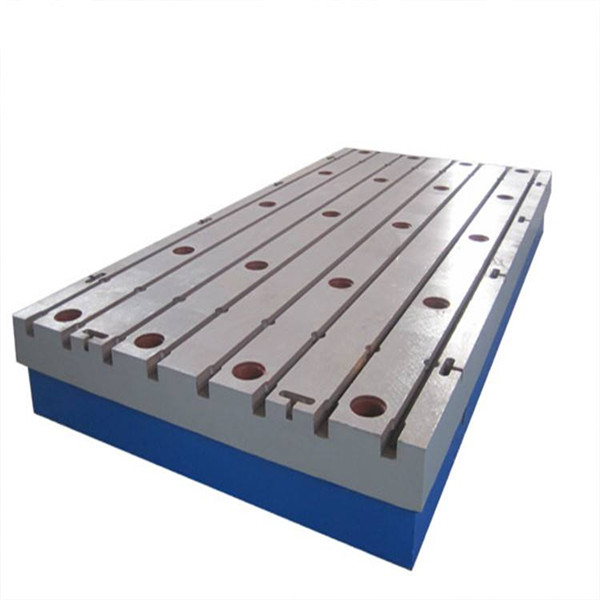
In recent years, the cast iron measuring tools industry has witnessed significant advancements, driven by factories committed to innovation, precision, and quality. As demand for reliable and accurate measuring instruments rises across various industrial sectors, cast iron measuring tools factories are stepping up their capabilities to meet stringent standards and evolving customer needs. This article explores the latest developments within these factories, highlighting their technological progress, production excellence, and the strategic direction shaping the future of the cast iron measuring tools market.
**Industry Overview and Growing Market Demand**
Cast iron measuring tools are indispensable in numerous manufacturing, construction, and engineering applications, where precision is critical. These tools, typically made from high-grade cast iron, ensure durability, stability, and dimensional accuracy—qualities essential for maintaining tight tolerances in machining and quality control processes. The market demand for such tools is bolstered by accelerating industrialization, technological advancements in manufacturing equipment, and increased regulatory requirements for quality assurance.
Factories specializing in cast iron measuring tools have responded by optimizing their production lines, enhancing material quality, and integrating advanced measuring technologies. The resulting products exhibit superior accuracy, durability, and ease of use, catering to sectors such as automotive, aerospace, electronics, and metalworking.
**Technological Innovation and Advanced Manufacturing Processes**
One hallmark of leading cast iron measuring tools factories is the investment in cutting-edge manufacturing technologies. Automation and computer numerical control (CNC) machining have become standard practice, enabling precise shaping and finishing of cast iron components. These factories employ rigorous quality control measures, including coordinate measuring machines (CMM) and laser scanning, to verify dimensional accuracy of the tools before dispatch.
Additionally, innovations in heat treatment and surface hardening techniques have improved the wear resistance and longevity of cast iron measuring tools. Coating technologies, such as anti-corrosive and lubricating layers, further enhance tool performance in harsh industrial environments.
Integration of digital interfaces and smart measurement systems is another area of progress. Factories are developing electronic calipers, micrometers, and gauge blocks with digital readouts, wireless connectivity, and data logging capabilities, thereby facilitating seamless integration into Industry 4.0 frameworks.
**Quality Assurance and Compliance Standards**
Ensuring product reliability remains a core focus for cast iron measuring tools manufacturers. Factories adhere to international quality standards like ISO 9001 and ISO/IEC 17025, which govern quality management systems and calibration laboratory competence respectively. Certification by these bodies underscores the factories’ commitment to delivering tools that meet or exceed customer expectations.
Moreover, many factories maintain traceability records for every measuring instrument, enabling clients to verify calibration history and compliance. This transparency is critical for industries where measurement accuracy impacts safety, product functionality, and regulatory adherence.
**Sustainability and Environmental Considerations**
Recognizing the importance of environmental stewardship, cast iron measuring tools factories are incorporating sustainable practices in their operations. Efforts include optimizing resource utilization, minimizing waste generation, and adopting eco-friendly materials and processes where feasible. Some factories have invested in energy-efficient machinery and recycling systems to reduce their carbon footprint.
Such sustainable initiatives align factories with global environmental goals and appeal to environmentally conscious customers.
**Market Expansion and Customer-Centric Approaches**
With the globalization of manufacturing, cast iron measuring tools factories are expanding their reach beyond domestic markets. By establishing strategic partnerships, investing in export logistics, and participating in international trade shows, these factories are increasing their visibility and accessibility worldwide.
Customer relationships are strengthened through tailored solutions, responsive after-sales service, and technical support. Many factories offer customized measuring tools designed to meet specific client requirements, reflecting a focus on flexibility and innovation.
**Company Showcase: A Model of Excellence**
One prominent cast iron measuring tools factory exemplifies these industry trends. Established with decades of experience in precision instrument manufacturing, this company has continuously evolved to embrace technological advancements and quality management. Its extensive product range includes digital and manual calipers, micrometers, gauge blocks, and specialized measuring jigs, all manufactured under stringent quality controls.
The company’s production facility integrates CNC machining centers, automated inspection systems, and a dedicated calibration laboratory accredited to ISO/IEC 17025 standards. Its commitment to research and development has led to several proprietary innovations in measurement accuracy and tool ergonomics.
Furthermore, this factory prioritizes sustainability, having implemented energy-saving initiatives and waste reduction programs resulting in measurable environmental benefits.
Internationally, the company has established partnerships across North America, Europe, and Asia, supported by strong technical service teams and global logistics networks. Clients repeatedly commend the factory for product reliability, timely delivery, and exceptional customer support.
**Looking Ahead: Challenges and Opportunities**
While the cast iron measuring tools industry is robust, factories face challenges including raw material price fluctuations, competition from alternative materials and digital measurement technologies, and the need to continuously enhance precision in response to increasingly complex manufacturing requirements.
Nevertheless, opportunities abound in integrating smart technology into traditional tools, leveraging big data analytics for predictive maintenance, and expanding into emerging markets with growing industrial bases.
Through sustained innovation, quality excellence, and customer focus, cast iron measuring tools factories are well-positioned to remain pivotal contributors to precision manufacturing worldwide.
**Conclusion**
The ongoing evolution of cast iron measuring tools factories illustrates a broader trend toward advanced, high-quality, and sustainable manufacturing solutions. By blending traditional craftsmanship with modern technologies, these factories produce measuring instruments that meet the critical demands of contemporary industries. As they continue to innovate and expand globally, these manufacturers play a vital role in enhancing precision, efficiency, and quality across diverse manufacturing sectors.