
High-Quality Cast Iron V Block for Precision Machining
By:Admin
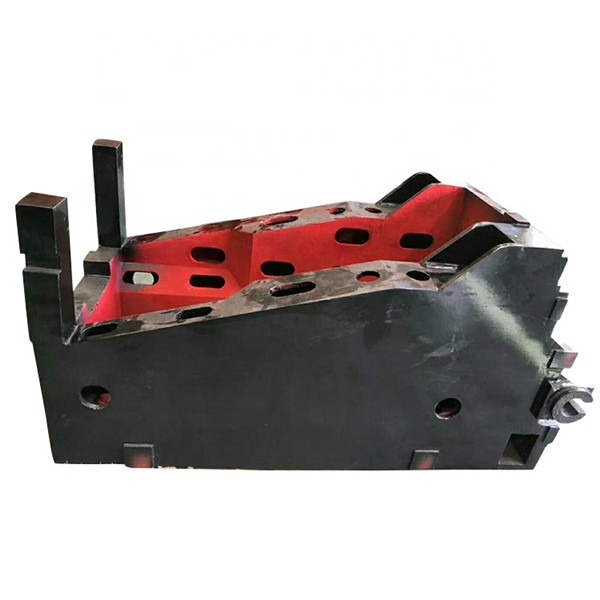
In the realm of precision machining and manufacturing, the importance of reliable and accurate workholding solutions cannot be overstated. Among these essential tools, the Cast Iron V Block stands out as a fundamental component, providing unparalleled stability and precision in securing cylindrical workpieces during inspection and machining processes.
**The Significance of Cast Iron V Blocks**
Cast Iron V Blocks are specially designed blocks typically featuring a V-shaped groove used to hold round objects securely in place. Their primary function is to aid in the accurate measurement, marking, and machining of cylindrical components such as rods, pins, shafts, and tubing. The unique V-shaped design allows the workpiece to sit firmly at two points along its surface, ensuring minimal movement and maximum stability.
The inherent properties of cast iron make these V Blocks especially suited for industrial use. Cast iron's rigidity and excellent vibration dampening characteristics contribute to highly stable setups, reducing the likelihood of errors in critical measurements and machining steps. Additionally, cast iron’s resistance to wear ensures the durability of these tools under demanding factory conditions.
**Applications in Manufacturing and Quality Control**
In both quality control departments and manufacturing floors, Cast Iron V Blocks play a crucial role. During inspection processes, they support pieces in conjunction with dial indicators, micrometers, or height gauges to assess roundness, concentricity, or positioning. This ensures components meet stringent tolerances demanded in aerospace, automotive, and heavy machinery sectors.
On machining centers, V Blocks serve as reliable fixtures when turning, grinding, or drilling round stock. Their stability allows for reduced setup times and improved repeatability across production runs, enhancing overall manufacturing efficiency. By minimizing manual adjustments and slippage, the risk of costly rework or scrap is significantly lowered.
**Advantages Over Alternative Materials**
While materials such as steel and aluminum are commonly used for various tooling applications, cast iron remains the preferred choice for V Blocks due to its unique advantages. Compared to steel, cast iron is generally less prone to deformation under load and provides superior vibration absorption. Aluminum, while lightweight, lacks the mass needed to adequately stabilize workpieces, leading to potential inaccuracies in machining or inspection.
Moreover, cast iron's thermal stability helps maintain dimensional consistency even under temperature fluctuations encountered during manufacturing operations. This characteristic ensures that measurements and machining actions remain precise over time, contributing to the production of high-quality parts.
**Innovations and Industry Trends**
Recent advancements in manufacturing technology have prompted innovations in V Block design and production. Precision casting and CNC finishing techniques allow manufacturers to produce V Blocks with tighter tolerances and improved surface finishes. Some modern V Blocks feature integrated magnetic bases, enabling secure attachment to machine tables and compatibility with automated inspection systems.
Moreover, industry demand for customizable solutions has led to the availability of V Blocks in various sizes and configurations to suit specific workpiece dimensions and operational needs. Specialized coatings and treatments further enhance corrosion resistance and surface hardness, extending tool life and reliability.
**Company Overview**
As a leading manufacturer in the field of industrial tooling, [Company Name] has dedicated decades to developing and supplying high-quality Cast Iron V Blocks tailored to meet the evolving demands of precision industries. With an emphasis on material quality, manufacturing precision, and customer-focused customization, the company continues to support manufacturers worldwide in achieving enhanced accuracy and productivity.
Employing advanced foundry techniques and rigorous quality control standards, [Company Name] ensures that each V Block delivers consistent performance in challenging environments. Their comprehensive product range addresses the diverse applications found in sectors including automotive, aerospace, energy, and construction equipment manufacturing.
**Looking Ahead**
The increasing complexity of mechanical components and the growing emphasis on tighter tolerances underscore the ongoing relevance of reliable fixturing solutions such as Cast Iron V Blocks. As manufacturing embraces automation and digital inspection technologies, V Blocks will continue to evolve, integrating new features that facilitate seamless interaction with smart systems.
Manufacturers seeking to improve their measurement accuracy and machining precision would benefit from investing in high-quality Cast Iron V Blocks, which remain a cornerstone of effective workholding strategy. With its proven material properties and design versatility, the Cast Iron V Block exemplifies how fundamental tools continue to empower modern industry.
---
This comprehensive overview highlights the critical role that Cast Iron V Blocks play in ensuring precision and stability across manufacturing processes. Through durable materials, thoughtful design, and adaptability to technological advancements, these tools remain indispensable components within today’s quality-driven production landscape.